


When utility crews step onto a jobsite, whether it’s a high-voltage substation, a remote transmission line, or an emergency storm response, there is absolutely no margin for error. In these environments, grounding isn’t just a regulatory box to check; it is the physical barrier between a controlled work environment and a catastrophic electrical event.
Selecting the right electrical connectors for field safety is a decision that carries immense weight. The connector is the literal bridge in your grounding system. If that bridge is weak, the entire safety protocol collapses. The choice between C-clamps, duckbill clamps, and ball-stud connectors directly impacts fault current handling, connection integrity, and the speed at which a team can safely begin their task.
Why Connector Selection is the Foundation of Field Safety
While grounding cables often receive the bulk of the attention due to their size and visibility, the connectors are where safety is truly won or lost. A grounding system is a chain, and as the old adage goes, it is only as strong as its weakest link. In many field failures, that link is the interface between the conductor and the ground.
The Risks of Poor Selection
An improperly matched or poorly installed connector creates a cascade of hazards:
- Increased Resistance: High resistance at the connection point generates heat. Under fault conditions, this heat can cause the connector to weld, melt, or explode.
- Mechanical Failure: If a connector isn’t designed for the specific geometry of the conductor (e.g., using a flat-jaw clamp on a round wire), it can slip or vibrate loose.
- Arc Flash Hazards: A loose connection is an invitation for an arc flash, putting every worker in the vicinity at risk of life-altering injuries.
- Operational Delays: Using the wrong tool for the environment slows down deployment, extending the time crews are exposed to high-risk areas.
The Benefits of Precision
Conversely, the right connector provides a “set and forget” level of security:
- Low-Resistance Path: Maximizes the efficiency of the grounding system to divert fault current.
- Stability: High clamping force ensures the connection remains intact even during the physical “whip” of a high-current fault.
- Efficiency: Streamlined designs allow for rapid installation with hot sticks, minimizing the time spent in the “dead zone.”
Understanding the Mechanics of Temporary Protective Grounding (TPG)
In temporary protective grounding setups, connectors serve as the mechanical and electrical interface. They must maintain consistent contact under extreme variables, including high-voltage induction, harsh weather (ice, wind, and rain), and the physical vibration of the lines themselves.
Before choosing a connector style, one must understand the three variables of the “Safety Triangle”:
- The Conductor: Is it a round wire, a flat bus bar, or a square terminal?
- The Environment: Is this a static substation or a dynamic overhead line during a windstorm?
- The Fault Rating: What is the maximum kA (kiloampere) rating the connector must withstand for a specified duration (usually 15 or 30 cycles)?
C-Clamps: The Heavyweight of Connection Strength
What They Are
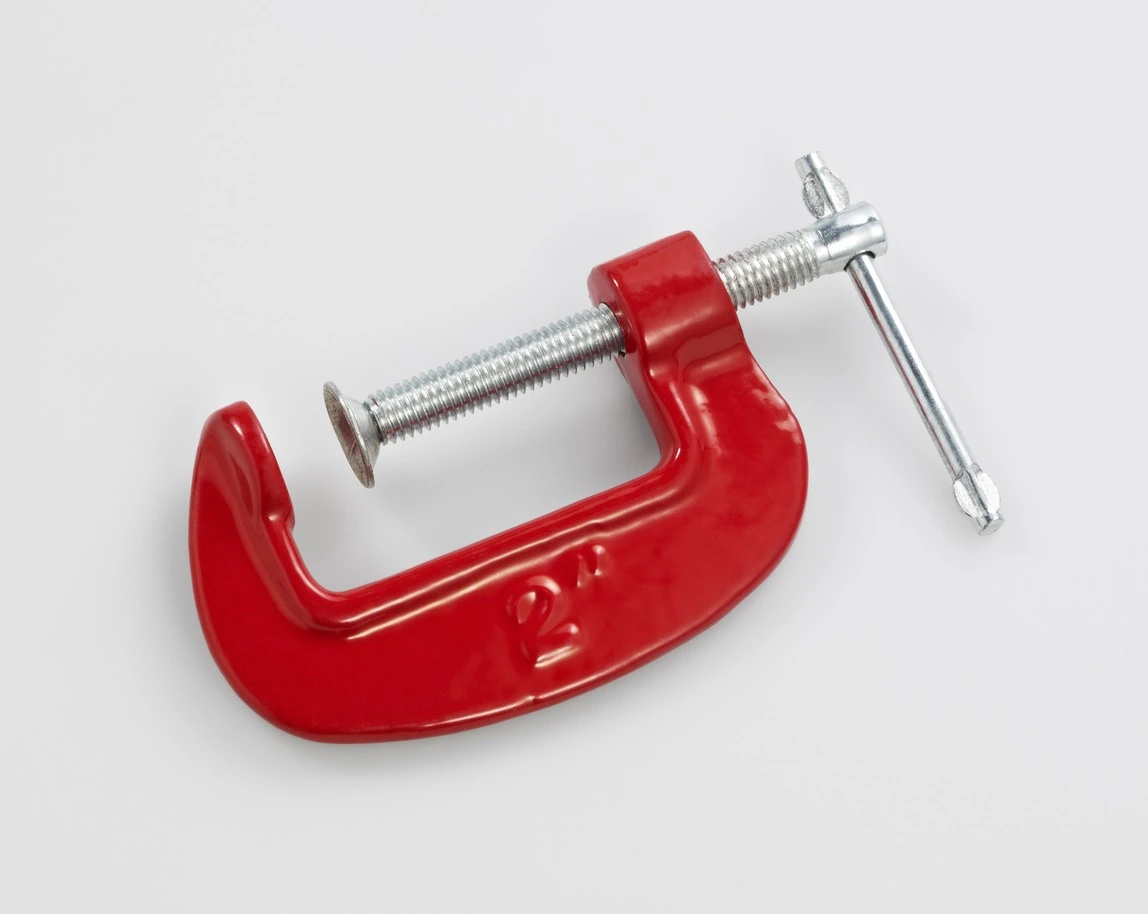
C-clamps are threaded, screw-tightened connectors usually manufactured from high-strength bronze or aluminum alloys. They function much like a traditional carpenter’s C-clamp but are engineered with high-conductivity jaws designed to bite through oxidation and debris.
Where They Excel
C-clamps are the gold standard for substations and fixed equipment. Because they offer a flat-to-flat or flat-to-round interface with immense mechanical pressure, they are ideal for:
- Bus Bars: Their wide jaws provide maximum surface area contact.
- Switchgear: They can be tightened into tight spaces where spring-loaded clamps might not fit.
- Long-Term Maintenance: If a ground needs to stay in place for days or weeks, the threaded security of a C-clamp ensures it won’t budge.
Pros and Cons
- Strength: Unmatched clamping force.
- Reliability: Extremely durable and resistant to mechanical wear.
- Limitation: They are the slowest to install. They require significant manual turning (often via hot stick), which can be fatiguing and time-consuming in emergency “storm-out” scenarios.
Duckbill Clamps: The Versatile Field Performer
What They Are
Named for their distinctive shape, duckbill clamps feature spring-loaded or rapid-thread jaws. They are designed to “snap” or slide onto a conductor and then be tightened quickly.
Where They Excel
Duckbill clamps are the “bread and butter” of distribution and transmission line crews. Their design is optimized for overhead work where the conductor may be moving or where the worker is operating from a bucket truck.
- Emergency Restoration: When speed is the priority to restore power after a storm.
- Varying Conductor Sizes: The “duckbill” shape is naturally adaptive to a range of wire diameters (AWG sizes).
Pros and Cons
- Speed: Much faster to apply than a traditional C-clamp.
- Ergonomics: Usually lighter and easier to manipulate at the end of a long fiberglass pole.
- Limitation: Because they rely on spring tension or shorter thread paths, they may have slightly lower fault current ratings than massive bronze C-clamps. Always verify that the kA rating matches your system requirements.
Ball-Stud Connectors: The Peak of Efficiency and Standardization
What They Are
Unlike the other two types, ball-stud connectors are a two-part system. A spherical “ball stud” is permanently bolted to the equipment or structure at designated grounding points. The connector itself is a socket-style clamp that snaps over the ball.
Where They Excel
This system is designed for standardized utility fleets and modern substations. If your infrastructure is designed with grounding in mind, ball-studs offer the most “error-proof” connection available.
- Repetitive Tasks: Ideal for crews performing the same maintenance routines daily.
- High-Efficiency Workflows: Reduce the “guesswork” of where to attach a ground.
Pros and Cons
- Consistency: Eliminates the risk of a worker attaching a ground to a painted or non-conductive surface.
- Speed: The fastest connection method; literally a “snap” and a quick turn.
- Limitation: It lacks flexibility. If you are in a field environment without a pre-installed stud, this connector is useless. It requires a significant upfront investment in hardware.
C-Clamps vs. Duckbill vs. Ball-Stud
| Feature | C-Clamps | Duckbill Clamps | Ball-Stud Connectors |
| Installation Speed | Slow / Manual | Fast / Spring-assisted | Very Fast / Snap-on |
| Fault Current Capacity | Very High | Moderate to High | High (Rating Specific) |
| Primary Surface | Flat Bus / Large Round | Overhead Conductors | Dedicated Studs |
| Vibration Resistance | Excellent | Good | Excellent |
| Tool Requirement | Threaded Eye-bolt | Eye-bolt / Spring | Socket / Eye-bolt |
| Weight | Heavy | Light to Moderate | Moderate |
Critical Factors When Making Your Choice
Choosing between these three isn’t about which tool is “better” in a vacuum; it’s about which tool fits the Application, Environment, and Rating.
1. Geometry of the Contact Point
A common field error is “point loading“, using a flat-jawed C-clamp on a small round conductor. This results in very little surface contact. If a fault occurs, the current is forced through a tiny area, causing a blowout.
- Flat surfaces? Use C-clamps.
- Round wires? Use Duckbill clamps with serrated V-jaws.
- Fixed points? Use Ball-studs.
2. The “Human Factor” and Fatigue
In heavy storm response, physical exhaustion is a safety risk. If a crew has to install 20 sets of grounds, the weight and “turn-count” of the connectors matter. Duckbill clamps reduce the physical toll on the lineman, potentially reducing the likelihood of a “shortcut” that leads to a loose connection.
3. Fault Current and Duration
You must calculate the potential fault current at the specific jobsite. If the substation is rated for 40kA and your duckbill clamp is only rated for 25kA, you are providing a false sense of security. Always ensure the connector’s ASTM F855 grade matches or exceeds the system’s requirements.
Maintenance: The Silent Component of Safety
A connector is a mechanical device. It is subject to corrosion, thread stripping, and spring fatigue. Field safety is compromised the moment a connector is “thrown in the bin” without inspection.
- Cleanliness is Conductivity: Wire-brush the jaws of your C-clamps and duckbills before every use. Oxidation on the aluminum or bronze acts as an insulator, increasing resistance.
- Lubrication: Threaded parts of C-clamps should be kept clean and lightly lubricated with a manufacturer-approved conductive grease to ensure they can be tightened fully.
- Spring Tension: For duckbill clamps, check that the spring hasn’t lost its “snap.” A weak spring leads to a loose connection.
- Visual Inspection: Look for “pitting” or small burns on the jaws. This indicates the connector has already seen a minor surge or poor contact and should likely be decommissioned.
The Divergent Alliance Approach to Field Safety
In the high-stakes world of electrical utility work, the transition from “de-energized” to “safe to work” is entirely dependent on the integrity of your grounding system. Whether you choose the rugged reliability of a C-clamp, the agile speed of a duckbill, or the precision of a ball-stud system, your choice should be driven by technical requirements and field conditions.
The best safety programs don’t just provide equipment; they provide the right equipment for the specific challenge at hand. By understanding the mechanical and electrical nuances of these connectors, you empower your crews to return home safely at the end of every shift.
At Divergent Alliance, we specialize in providing high-grade, tested electrical connectors that utility crews trust when their lives are on the line. We understand that field safety is about more than just parts—it’s about the peace of mind that comes from using equipment designed for the rigors of the real world.