


First and foremost, we are here to talk about how to become an electrical lineman. If you are interested in becoming an NFL lineman, you are in the wrong place, but might need a backup plan so maybe keep reading?
Electrical linemen and other electric utility workers have a very important role; they keep the electrical system that provides homes and businesses with electricity running. These professionals are responsible for installing, maintaining, and repairing exterior electrical power systems and auxiliary equipment which includes powerlines, streetlights, transformers, and more. Their work helps prevent lengthy power outages that can be inconvenient and even dangerous.
When we say linemen are heroes, they truly are. Their work saves lives as they risk their own. Linemen sacrifice comfort every day to ensure electrical infrastructure stays strong and local communities suffer as little as possible during an outage.
What Does an Electrical Lineman Do?
A lineman is a professional who is responsible for installing, maintaining, and repairing electrical power systems and auxiliary equipment. Linemen must make sure that the entire system, from the power plants to the homes and businesses receiving the power, is in working order. As a lineman, you can expect to work on overhead structures like powerlines and streetlights, as well as underground trenches and vaults.
A lineman must be knowledgeable of how the entire electrical power system works to diagnose and repair issues and provide effective maintenance.
Skills Required for Linemen
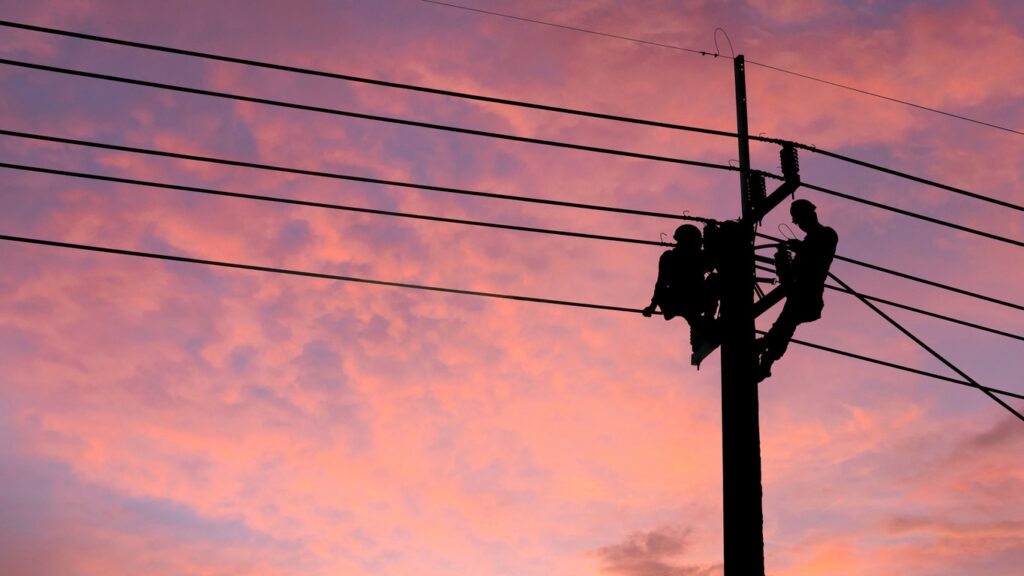
Anyone interested in becoming a lineman must understand the dangerous nature of the job. Linemen must be strong and healthy enough to climb poles confidently and comfortable working with high-voltage systems and heavy equipment.
The following are important skills a lineman should have before or by the time they are done with their apprenticeship:
- Ability to perform maintenance and repairs on the equipment
- Skills in mathematics, including industrial math
- Knowledge of basic public safety and security measures
- Knowledge of building and construction
- Knowledge of vegetation management
- Ability to climb poles and work at high altitudes
How Much Do Electrical Linemen Make?
Skilled linemen are in demand as they are needed to keep our electrical system running. Becoming a journeyman lineman can put you on a good career path in the U.S. Many linemen are union employees and work for electrical utility companies.
Those interested in becoming a lineman must also understand that this job is dangerous and comes with a higher than average risk of injury or death. This is why lineman must undergo thorough training and complete an apprenticeship before finding work as a journeyman lineman.
If you are interested in a career as a lineman, you must follow the steps to begin your training and start your career. This is a highly specialized job that requires hands-on and classroom training. Many start their lineman journey as a groundman or pre-apprentice and/or apprentice. After apprenticeship is complete, lineman can become highly skilled journeymen.
How to Become an Electrical Lineman
Before becoming a journeyman lineman, you must start as an apprentice lineman. Sometimes it is possible to get a position that includes a four-year paid apprenticeship with both on-the-job and in-classroom training.
Lineman Career Progression
Groundman or Pre-Apprentice
Before entering an apprenticeship program, some individuals work as groundmen, performing support tasks like transporting tools and materials and assisting linemen. This is often a stepping stone toward becoming a lineman.
Apprentice Lineman
Most linemen begin their careers as apprentices. During this stage, they receive on-the-job training and classroom education to learn the skills needed for the trade. Apprentices work under the supervision of journeymen or foremen as they gain experience.
Journeyman Lineman
A journeyman lineman has completed their apprenticeship and is fully certified to work independently on electrical systems. They are highly skilled in performing complex tasks, ensuring safety, and leading teams.
Journeymen often supervise apprentices and are authorized to take on advanced responsibilities that require greater expertise.
Why Journeyman Status Matters
- Safety and Competence: Electrical work, especially on high-voltage systems, is hazardous. A journeyman certification ensures that the lineman has met rigorous training standards and can work safely and effectively.
- Opportunities: Achieving journeyman status can open doors to more job opportunities, higher pay, and leadership roles.
- Industry Standards: Some companies or unions, like the IBEW, require linemen to achieve journeyman status to work independently or in specific capacities.
Next Stages Beyond Journeyman:
- Foreman/Supervisor: Oversees a team of linemen, manages projects, and ensures safety and efficiency.
- Master Lineman: A highly experienced professional with advanced expertise in the trade, often serving as a senior-level advisor or trainer.
- Specialized Roles: For example, transmission linemen, distribution linemen, or hot-line workers who specialize in specific aspects of the job.
Lineman Schools and Training Programs
If you are interested in completing industry training or an associate degree before starting your apprenticeship, there are many options available. You can choose to get training at an industry training center or through a program at a college or university. Search for training centers and programs in your area to know your options and choose your preferred program.
The following are lineman training facilities and programs throughout the U.S.:
Southeast Lineman Training Center: The Southeast Lineman Training Center (SLTC) in Trenton, GA is one of the best lineman training centers in the U.S. They offer two programs: a 15-week electrical worker program and a 7-week communications worker program. The electrical program includes classroom and field training and certification and covers transmission, substation, and CDL training. The communications program covers telecom linework. Financial aid is available.
North American Lineman Training Center: The North American Lineman Training Center (NALTC) in McEwen, TN is a smaller institution with a low instructor to student ratio. Their program covers transmission, distribution, conversion, transformers, and other important subjects and there is an option to add CDL training. Financial aid is available from this school.
Northwest Lineman College: Northwest Lineman College (NLC) is one of the older lineman schools with campuses in Meridian, ID; Oroville, CA; Denton, TX; and Edgewater, FL. NLC offers an Electrical Lineworker Program and programs for Telecommunications Lineworker and Gas Distribution. The Electrical Lineworker Program trains new linemen to work on powerlines and heavy machinery. You can get financial assistance from NLC and housing assistance.
Texas A&M Engineering Extension Service: The Texas A&M Engineering Extension Service (TEEX) offers programs for linemen in electrical and telecommunications.
Lineman Institute of the Northeast: The Lineman Institute of the Northeast is a small school in Saugerties, NY that offers a 15-week course in lineworker and CDL training.
Southside Virginia Community College: Southside Virginia Community College (SVCC) in Blackstone, VA offers an 11-week lineman program. This school is one of the preferred schools for the Virginia, Maryland, and Delaware Electric cooperative territory.
American Line Builders Joint Apprenticeship & Training: The American Line Builders Joint Apprenticeship & Training Center (ALBAT) in Medway, OH provides training programs, apprenticeships, and continuing education for linemen. Their training programs include Cable Splicing, Outside Line, Substation, Traffic Signal, Transmission, and Underground Residential Distribution (URD) among others. They take a systemic approach to their training to ensure linemen learn the necessary skills and get effective safety training. ALBAT also works with the IBEW in Kentucky, Maryland, Ohio, Washington DC, Illinois, Indiana, and Michigan through their apprenticeship program. A portion of every lineman’s check in the IBEW goes to ALBAT training programs.
Lineman Tools and Equipment from Divergent Alliance
If you are interested in starting a career as a lineman, you should first consider the skills needed as well as the inherent danger of the job. Once you decide to proceed, you can choose a training program and an industry training center or college that will help you learn the skills you need to start an apprenticeship. After completing your apprenticeship, you will be able to get a position as a journeyman lineman.
If you do stick with this career path, you can participate in rewarding Emergency Storm Response work by signing up for our Storm Roster. We are a leading, lineman-owned IBEW company and are always looking to add great people to our team!